Saturday, November 10, 2012

The Making of "Chicken"-- for beginners


This post is dedicated to everyone that has ever wondered how exactly we farmer people do it. 


This Mitchell and Web clip is a humorously oversimplified version of how most people think the "chicken" they buy from the store comes to be.

Surprisingly or not, there is a little more to it than just getting some chickens and killing them or not.

To give our reader some perspective, once upon a time, people that lived on a farm kept chickens for eggs and sometimes dinner. Your hens layed about 2 to 4 eggs in a week. If a hen stopped laying for most any reason, she went into the stewpot (no matter how much you liked her.) If you ended up with more than one rooster, you kept the one you liked the best and made sunday dinner out of the others. Chickens like this started life as eggs laid by the mother hen, hatched by her, and nurtured by her until they were grown at around 6 months of age when they would either become new laying hens, or be made into meat.

Over time, people began to zoom into "traits" they liked best about chickens, and mated chickens that had those traits together, and developed distinct chicken breeds that were best at making eggs, or best at making muscle (meat.)
The baby boom and industrialization of the 1950s drove poultry scientists to develop a better meat chicken that would feed people even more efficiently.

The real face of KFC... note the HUUUGE tracts of land.
And so the "cornish cross" was born. All of the chicken purchased in a grocery store these days-- and even the majority of small farm families are this type of bird.

A quick compare of the bird at left, to the bird at right, should pretty much sum up why this type of bird makes a good amount of chicken, but not only is he big, his breasts are HUGE compared to a traditional chicken. Not only that, but he grows to this massive size in HALF the time it takes an ordinary chicken to grow. Not only does it take less time, a shorter life means less food is spent to make double the meat.

Amazing facet of science and industry, there are NO downsides to this....

Oh except of course for the fact that chickens that grow so quickly are prone to leg problems and organ failures, or that they are bred so much to be eating machines they don't really act like chickens. In fact, if you give these guys a real chicken yard or pasture, they will stand pretty much in the same 2 feet of space forever. Eating and pooping. Eating and pooping. Just as long as they can reach the food. There also isn't really much chance at having a "change of heart" or "rescuing" these types of birds. Eventually, the weight is too much and they die of natural causes in a few months. (The average chicken can live many years)

It sounds like a pretty terrible existence, right? So why does everyone use them? Well, 'cause we like chicken. For most people the cost of feed and how quickly a person can "finish" 20 chickens and get them into a freezer and be done with it. Some people go with the crosses because it helps their resolve to know the bird can't possibly live a long and happy life so they might as well make it into the meat they need.

Both the commercial chicken market and the family farmer orders these baby chickens from a hatchery-- a business who specializes in breeding chickens, hatching the eggs and selling the chicks. A commercial farm likely receives their chicks delivered on a truck, while a family who orders a box of 10, 20 or 50 chicks receives them via US mail, and pick them up at the post office. "Broiler chicks" as they are called, are often appealing as they are a short term commitment, with a lot of return.

The chickens are kept in a warm box with a heat lamp, and fed "chick starter"-- a baby chicken food packed full of nutrients they need to grow healthy.
When they get bigger and feathers grow in to replace the fuzz, the chicks don't need the lamp anymore, and eventually the birds go outside (or into a bigger pen in the barn if the weather is cold) and are fed a "grower" or "meat bird" food designed to give them protein to make muscle and just enough calcium to build the bones to carry it.

"cornish game hens", are these same chickens harvested when they are young and small, as the HUGE 6 pound roasting chicken harvested when it's about 3 months old, the only difference is time and age.

The rest of the process most people can figure out on their own.. the chicken is killed, feathers plucked, undesireable parts removed, and sent on to be sold in pieces, or made into chicken products like nuggets or noodle soup.

Many people "in the know" maintain that these fast growers taste like a watered down version of "chicken flavor" and that the old "heritage" breeds may take more time to grow, but are worth the wait.

I encourage anyone who gets the chance to sample a heritage chicken to do so! You might be surprised to decide for yourself how "chickeny" chicken can taste!

Saturday, October 20, 2012

A Mud Free Makover (This time!)

Those that follow this blog semi-regularly (all two of you--thanks Mom!) might notice something is a little..... different.
Did I change the curtains? throw some paint on the cabinets? Well, if you can't quite put your finger on it (and you're the type that wonders what ever happened to the herd of mammoths that used to roam the neighborhood--) I'll put it in a nutshell. Everything is different.

You see, when we moved to the new homestead and off of the rental, we had intended to keep our old name; however while I was pouring over google maps I noticed a large farm about 3 miles away from our home with virtually the same name! Shenanigans!!
Not only does it exist-- the pretenders have the audacity to have a farm sign next to the school! THEY ADVERTISE DUCKLINGS!!

So, suffice it to say-- to avoid any confusion our little farm has undergone a re-branding.

Why the palm tree wallpaper you ask??

This might be strange to explain to non Arizonans, but I kid you not-- palm trees are a staple along the horizon of the west valley farm country. Hay farms and homesteads the valley over have the tall frondy things.

As for growing our little farm experiment?

We have made leaps and bounds. We have expanded from one cow to 4. (See my last post about Milking Martha.) A herd of 9 Nigerian Dwarf Dairy goats have been given to us and we anticipate a busy kidding season in February-- we have 6 pregnant does and the breed is known to not only give birth twins with regularity, they often drop triplets and even have been known to have quads!

Our flock of welsh harlequins currently stands at 15 breeders. We also had donated to us a flock of 5 Pekin ducks, and we have housed them with our mixed breed and cayugas for an exceptional meat duck breeder pen.

Our two wyandotte hens are grown-- we enjoyed them very much, but as we are focusing on the ducks for eggs we've listed them for sale hoping to share them with a chicken fancier. Candidly speaking, I should probably part with some of my more ornamental duck hens too!

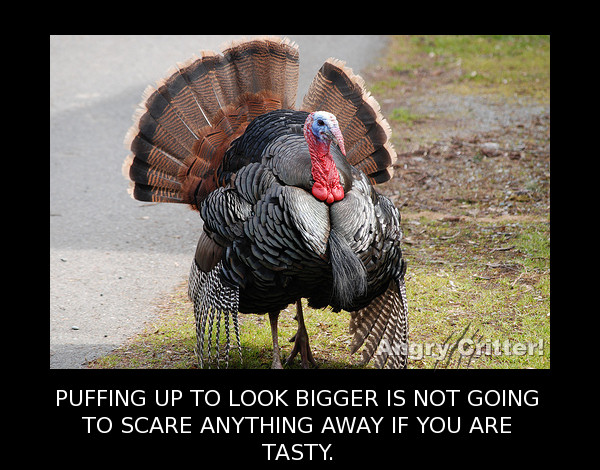
Our thanksgiving turkeys are in the freezer waiting for the big day-- their two sisters are healthy and vigorous and will be staying on as breeders for the next generation of Dusky Acre turkey dinners. We also added 3 new young turkeys-- one baby red palm hen from bourbon red heritage stock, and two young Fall Fire toms that should do an excellent job fathering next year's holiday meals.

Our geese have stayed on-- Goliath and Ethel are still joined at the hip flirting with the idea of setting a fall nest. Brucie and Lucy are a little more aloof, but I am hopeful they have what it takes to raise their own family in the spring.

Since we came into the new place at the beginning of fall garden season we worked quickly to get something--- ANYTHING planted, so we have a large series of pots and dresser drawer boxes full of dirt and plantings.
We've got bell peppers, tomatoes (romas and heirlooms), tree onions, salad bowl lettuce, herbs, cucumbers, peas, zucchini and cantaloupe sprouting and looking incredible. A much better turnout than we had at the leased property. We have plans to put in more raised beds and get an extra large strawberry patch and a decent asparagus patch going within weeks-- beets and beans, chard, carrots, leeks and potatoes hopefully to follow as space permits.

Fixes and projects have been slow going but they are going!

We completed our first goat pen before the goaties arrived (thank goodness!), we have a lawn now where there was only dirt before. The demolition on the old deck wrapped up today and the space is clean and ready for new skirting and raised beds made out of the salvageable old deck wood to house the rest of those veggies in my list. Next the demo on the old white singlewide begins with that old deck to become the strawberry boxes.

We have a grape vine planted next to our covered porch to climb the lattice-- we have two vanilla plant starts that are doing well in their new pots. We have two shade trees (desert willows) to plant in front of the house that will be much appreciated when the heat kicks up again in a few months!

All in all, we are seeing progress every day-- I can hardly wait till we have more than eggs on "farming status"!

Monday, October 15, 2012

Secret Cow Level

Long story short. Most people I know, know how I adore Missy Moo, my precious little pocket cow. Missy cries for me when I leave the cow pen-- she nuzzles. It's no secret how I am anxiously awaiting her calf during the holidays.

Well-- a family member decided my cow was pretty neat. So he invested in 3 new dexters (that passed my basic muster for health and value.) Mama Martha is in milk and has a 3 month old baby (Monica). Betty Brown is a beautiful red dexter but hasn't seen a lot of hands on treatment, so to get the girls at their full potential, I've taken on training them.

We begin with milking Martha.

Now, Martha has been hand milked before. Once for sure. A year ago. Our first milking trial saw her pacing back and forth in the horse pen, bellowing for her baby all day. I am quite certain that the neighbors thought I was torturing the poor animal.

When the appointed hour came, first order of business was a swift kick in the bucket. (Side note: Jeffers sells VERY good quality stainless steel buckets.) Goodbye first few ounces of cream. Hello ringing in my hand.

With a flank rope in place, Martha couldn't bring herself to kick anymore. (HAH!!) So she took to spinning around the pole I tied her to... (...hah....) I persisted in trying to work what I could out of her when she stopped to catch a breath but she seemed determined not to let down her bounty, further what I did get was so full of dust and hair I think it probably could have won a sand castle competition with my milk bucket contents.
Dejected, dusk setting in, and finding it all of a sudden very hard to draw a deep breath I finally gave it up, put her back in with greedy baby Monica and the other cows.

7 hours later, I was in bed with pneumonia. So much for cow training.

A few days later, I was ready to try again. This time, I got wise to the spinning top maneuver and set up a milking stall across the fence from the peanut gallery (Monica, Missy and Betty) This time, we hit our stride! Martha munched her oats unnmoving for several minutes-- The soft calf lowes seemed to help with the letdown-- the milk bucket was screened, and my hands were learning the milking motion!! We had achieved Dairy!! When martha scooted too far away from the stool a tug on the flank rope brought her back. It was like milking a different cow, she was so mellow and compliant!
I didn't put much milk in the bucket since I was trying to leave a lot for the calf, but I pasteurized that 1/2 pint  with PRIDE!!

The next day I was so looking forward to getting another go at it, Martha was even getting better with being led. She didn't freak out so much when I put her in the horse pen. Yessir, everything was PEACHY!

Then at about 11 am I glance out the window and what do I see? A mama cow--- pacing around the cow pen. From the outside of it.

With a deep sigh I set down my coffee to go see what section of the fence she jumped over or tore out to escape.
It seems Martha was a bit of an engineer. How obvious that since she entered the pen by the gate--- she should leave that way.

Gate is now laying torn off of it's hinges. Horse is gone. Thankfully the hay pile is the most interesting place in the neighborhood and I was able to collect him quickly and re-hang the gate.

Obviously by now, I have realized I should not trust Ma'am Martha. When will I milk again? Glad you asked! I am working on yet another insidious plot to separate mother from (cow) child. Hopefully, a lot more fruitfully this time around.

Wednesday, July 4, 2012


It's become abundantly clear in this world that while we may want things to get better, it's a slow road if you plop down and wait for them to do so of their own volition.

Setting Spiritual fulfillment to the side (since that's a loaded canon, and everyone has their own untouchable preferred recipe) this blogger thinks that a lot of people; far too many these days, live their lives waiting for that magical moment when their situation will change and life will all of a sudden become "happy."

"Mommy, you will NEVER guess what I just did unsupervised in my room involving crayons, scissors, glue, fingerpaints, and the dog"


A new job or a raise, moving to a new place, meeting your soulmate, a new baby or pet-- a new place to live, or something new to drive. All these things may be important, but the type of people who put life on pause and wait for these times when they expect to be happy, often find themselves one day older, still not satisfied, and wondering how they got where they are.

So here we come to it; my humble suggestions to finding joy in the little things every day-- because life is made up of little things and every days.


1.) Grow something edible. 


A while ago a popular Ladies magazine published an article stating that psychologists found a unique connection in the reward centers of the brain that is triggered only when a person satisfies some primeval desire to feed or clothe themselves or their family members. This is often triggered by hobbies like knitting, sewing, canning, and gardening. Gardening is the simplest and most approachable way to benefit this bio-mental phenomenon (I totally made that word up, you like?)
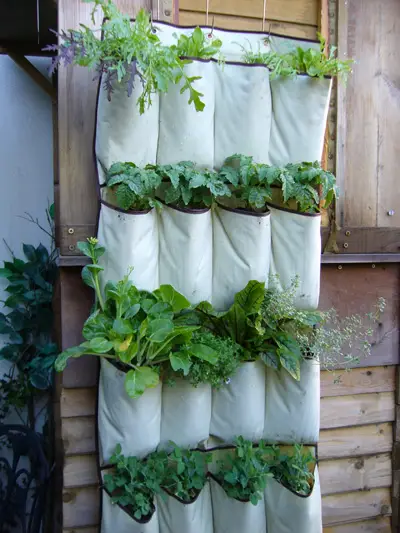
A shoe organizer has a midlife crisis


Most people think of gardening as a big production demanding yard space, destruction of lawn, hours of work-- but porch container gardens can be simple, thrifty, and beautiful. If fancy pots are too spendy (and in this blogger's opinion, store bought pots ARE) get ahold of some pots designed for trees. These can be had cheaply at Lowes, or often free on Craigslist from folks that recently planted a bunch of trees. Goodwill frequently offers rubbermaid tote bins without lids for cheap.

Growing too much maintenance? plant grape vines or a fruit tree that needs only water and sunshine to grow.

No outdoor space? start a windowsill herb garden in your kitchen and water it when you do your breakfast or dinner dishes.

In time, you'll find there will be a certain amount of pride in snacking on one of YOUR oranges or apples, and in cooking up pasta with YOUR basil.


2.) Dress yourself (and your daughters) like a princess.

"I should wash these windows... someday. Before my prince comes."
When I mention it, you will instantly remember that formal or semiformal dress in the back of a closet or bottom of a drawer. It fits, but has this STAIN on it you just can't get rid of. Maybe you're thinking of throwing it out, or you want to but can't bring yourself to do so because a relative gave it to you as a gift, or because you spent too much money on it.

First- here is one last ditch tip to remove stains-- treat the spot with hydrogen peroxide. It's a cheap, natural "magic" stain remover. If it didn't work the first time, treat it again. If the garment has a stink or a dinginess your laundry cycle didn't take care of, add a tablespoon of baking soda to your laundry detergent, and white vinegar in the fabric softener compartment.
Another option is a bottle of RIT dye to change the color to rectify stains or fading- this can be found in the laundry isle usually and can be done in a large bowl, a sink, or a bathtub- Dying is a great skill to have for reclaiming vintage items.

Second... if you love these clothes, find ways to wear them! If a little girl can't wear one of her dresses to church or school anymore, demote it to play-clothes status. My middle daughter has her favorite "princess nightgown"- an ankle length dress with silk, ribbon rosettes and a soft lace skirt that was demoted from the school rotation due to wear and tear, but she still feels like a disney princess at bed time.
I have different dresses I wear "out" or for messy at home activities, and some I wear as nightgowns after their "best days" are used up.

Third.. if you have "dress up clothes" that aren't getting used because you're afraid of "ruining them"-- stop worrying! Treating a day (or yourself) like you're not deserving of something nice is not going to help your mood or your long term goals. This tip follows the "use the good china" philosophy. And besides, even if you get a spot on something I've already told you how to fix it.

3.) Animals are awesome.

Research shows that people who have pets have less stress and live longer. Sure, it's easy for someone like this blogger to say... I live on a farm after all-- but there are a lot of ways to incorporate the therapeutic qualities of animals without collecting them. I'm all about responsible pet ownership, good stewardship, etc etc. and I don't advocate everyone rushing out and buying a dog or a cat. For one, not everyone is suited to taking care of an animal either by personality or lifestyle. But watching animal TV programs, cute critter youtube videos, visiting a (morally responsible) zoo, or petting or walking shelter animals will trigger a measure of catharsis normally limited to exposure to feathered or furry creatures.
For some reason, animals have always touched on something instinctive in mankind.

If you badly want a pet, and are able to keep one where you live, you do have a few options apart from dogs and cats.
My first "apartment living pet" was a ferret-- I was used to dogs and cats and I value qualities like personality, playfulness, and cuddlyness. Woozles are not for everybody-- they need frequent attention to be well socialized and to stave off bad habits. Their musky odor takes effort to manage (but it IS manageable). Some bird species can be very personable creatures, but they can be very noisy, sometimes destructive, and several species live longer than some pet owners can commit to caring for them. (I always say, don't adopt a critter unless you're prepared to see to it's needs as long as it lives.)

I've known many people who opt to keep indoor ducks as house pets-- They have personality, can be very quiet depending on breed/sex, can be diapered to prevent messes, don't chew, don't bite and don't shed hair- a very appealing combination of attributes.

Domestic rats are also an often overlooked pet. Like ferrets they need attention to be calm, but they fit the bill of cuddly, cute and playful, they don't have a tendency to claw, and their short life span is a reasonably small time committment, plus they travel easily. You don't often find someone having to rehome a pet rat due to having to move. They are generally gentle with children too. The downside to rattus domesticus is that they manage to escape at times, and need to chew constantly.

"Carrots? No thanks, I filled up on electronics."
Rabbits have been gaining ground as indoor pets in recent years because of their great personalities, cuteness and ability to be litterbox trained, but bunnies have drawbacks-- big ones. They like to chew on everything from walls to furniture to electrical cords-- hardly low maintenance pets.

4.) Eat well.
I don't mean eat whatever you want, anytime you want, but food is fuel for your body and mood at it's basest level. My waistline will readily attest that I'm not in the habit of turning down dessert or delicious processed fast food once in a while, but you know-- if you put watered down gas in your car, it will sputter and stop running all together if the gas is bad enough. Likewise high performance cars do better on high octane fuel. There is even a subtle difference between 85 and 87 octane gas in most vehicles.

The great thing about fueling your own body, is that unlike gas, higher quality does not cost you an arm and a leg-- it's all in the choices you make.
Plus, more complete "richer" food like whole grains, whole milk, real butter and actual meat (if your body is craving it) have been shown to satisfy cravings better and make you feel fuller.

5.) Get Mail 

Looking forward to a small short term goal is great for a person's mood, plus mail generally comes to your house or gets you out to do errands if you have to pick it up from a PO box. Getting something fun injects a little joy to doing errands or staying home/going home.

Order something online or win an ebay auction if you have disposable cash. Order free samples or exchange cards via snail mail with a friend, relative or pen pal if you don't.
Join a swap/barter community if you can neither afford or justify buying new things-- this keeps your "mail high" up, but keeps your clutter and unwanted items going out.

Mood bonus-- by taking charge and getting rid of things you no longer need you are seizing "control" of a facet of your life, a perennial mood booster-- it's empowering to rule your things rather than be ruled by them. Which brings us to tip #6.

6.) Command and Conquer your clutter
There is no reason on earth that a person needs to pay out of pocket in any way in order to save things they cannot comfortably fit into their house. If you have a storage unit, and you can't put those things into a place that you live, you officially have too much stuff.
If you don't have room for "your things" around you, you must not really need those things, since you are obviously living without them already.


But, above all though;


Sunday, April 8, 2012

In Celebration of Easter... Cheesecake! (with a carb free twist!)

Nothing says "holiday" like a feast, and typically the menu bears a certain "waistline be damned" quality.
The Schafer clan's favorite cheesecake however, is a guiltless baked New York style variety originally conceived as a part of the Atkins diet, but we prepare it today (and many other days) in an effort to stave off a pancreatic shut down, one dessert at a time.
It's so delicious, easy to prepare and cheesecake addict approved that I thought I would share our minimal guilt cheescake.

Ingredients:
~Three 8 oz packages of Neufchatel Cheese (Looks, smells and tastes like cream cheese, 1/3 the fat content.)
~1/4 to 1/2 cup splenda sugar substitute (or tweak your sugar substitute for flavor and adjust the calorie content. 1/4 cup Honey is also divine in this spot if you want to use MORE natural and local)
~2 Tablespoons vanilla extract (the real stuff is better, the cheap stuff is a wood processing byproduct.)
~3 whole eggs (or in my case, 2 large duck eggs)
~1 cup plain greek yogurt. (Oikos unsweetened is perfect, Fage is great, home made 'gurt is fab. You can also sub sour cream but I prefer the smoothness of yogurt.)
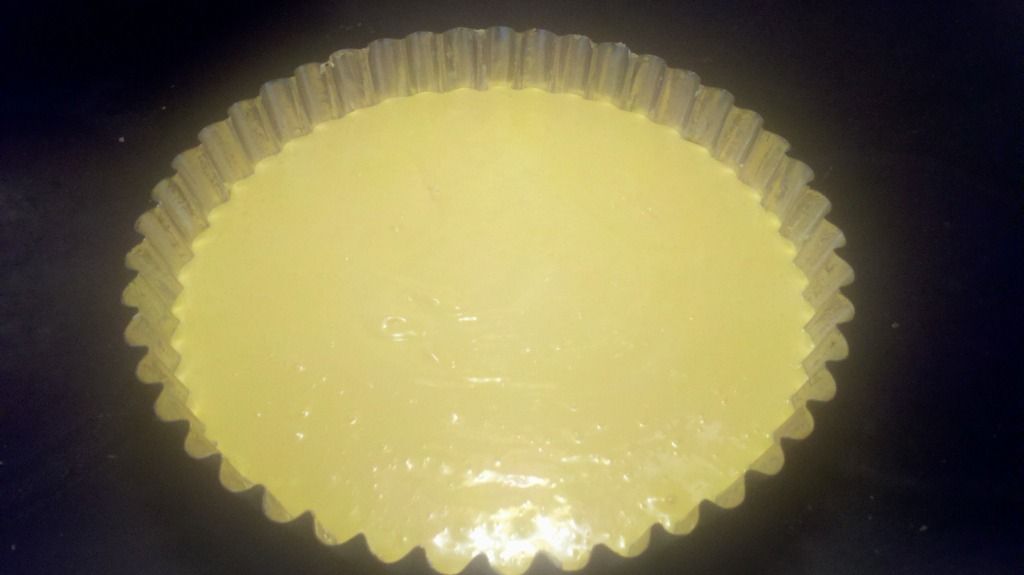
The unbaked batter as written (including food coloring.)
~ 6 drops of yellow food coloring (optional... looks more store bought with.)

Directions:
1.) preheat oven to 375 F
2.) Soften neufchatel in a large bowl
3.) With an electric mixer, blend cheese ALONE  until creamy and of an even consistency.
4.) Add sweetener, vanilla, greek yogurt and blend until thoroughly mixed.
5.) Beat in eggs ONE AT A TIME and blend after each is incorporated into the batter.
6.) Grease a glass pie pan or springform pan.
7.) Add batter to pan
8.) place in oven and bake for 45 minutes or until slightly firm in center.
If you want to avoid a "cracked top" you may bake the cake in a water bath (by setting the cake pan inside another, larger pan in an inch of water... but you know... my family doesn't care if the top has some crackles in it :D)

Prep time, about 15 minutes!

The main difference in this cheesecake is a lack of empty carbs and fat in a crust, but almond meal dusted in the bottom on the greased pan is a delicious alternative for nut lovers. The basic recipe has about 5 grams of carbs give or take, but I encourage every chef to tweak this blueprint to suit your family's taste, local foods (or household foods!) and special diets.

Friday, March 23, 2012

Spring Cleaning: Defeating the "It's in Storage" Monster

Our blog today is about "Storage", and how to part with it effectively.
If you make this face every time you open your hall closet
or "spare room" this column is for you.
There is no reason on earth that a person needs to pay out of pocket in any way in order to save things they cannot comfortably fit into their house. If you have a storage unit, and you can't put those things into a place that you live, you officially have too much stuff. 
If you don't have room for "your things" around you, you must not really need those things, since you are obviously living without them already.

If you are at all concerned about money, immediately look to eliminate things from your life you don't use. Knick knacks, clothes, appliances, exercise and sports equipment, hobby materials that have lost their luster, dishes, family heirlooms you don't like, what have you, and liquidate it into much needed cash.

~Yard sales have been popular for decades, but they've taken a serious dip in success as people have less free cash to drive around looking for sale signs and deals to be had there. (Some cities and counties don't even allow sale signs at street corners anymore.) 
"It looked like they might have had a treadmill out there, did you want to turn around?"
In other words, far fewer people drop by a yard sale just to see what's there. The majority of sale shoppers are looking for a deal on something very specific, and they won't drive far out of their way to find it. 

A successful yard sale takes far more planning, effort and promoting than ever before. 
-If you want to have a yard sale you have to promote your "main attraction items". Your add must mention items people are looking for to get people interested in buying your stuff out to see it. Furniture, antiques, vintage clothes, appliances, children's clothes, baby items, camping equipment, bunk beds, etc are all big draw items and will attract people with cash in their pocket and a truck to take it away versus lookie loos and just browsing Betties.

If you live in a rural area count on only your neighbors showing up to a yard sale. 
You should probably look at joining or organizing a "community rummage sale" with a church, charity or large group of families to attract a large enough collection of items to draw customers to your location (again, think main attraction items)
I'll be honest... even this stock photo from
google images excites *my* inner bargain hunter. 
Rummage sales don't have to donate all sale proceeds to do good-- you can get rid of your clutter and get paid too by charging a "space rent" and donating those proceeds- a sure thing in terms of raising money for a good cause as opposed to being capped by potential sales and talking people into giving away their stuff. 

Selling items online is always a viable choice. 
Ebay is good for listing very specific items that people ordinarily go there to look for, like clothing lots, collectibles and current or retro electronics, but not so good for average or mundane items-- new home made crafts generally have a disappointing return on ebay, and pass on listing items on ebay that are so saturated that you won't get an acceptable price. Know how much it will cost to ship your item too... under estimating what to charge for shipping, plus your listing and pay pal fees is a sure way to get skunked. Paying to get rid of your things is very counter productive to earning money.

Craigslist and Ebay Classifieds are good for large items that need to be picked up locally rather than shipped, depending on how active your area is. There is usually some local classified listing available through a local paper, radio station or even facebook group. 

Etsy is a great specific site for listing craft supplies, vintage items, and homemade crafts because that is what the site users are looking for, the listing periods are months long, and listing fees are cheap.
If money doesn't concern you, there are many ways to offload excess without having to wait for someone with cold hard cash to come along. There are many forum communities with "barter boards" where items you don't need are mailed off to someone in exchange for items you want and ebusinesses that specialize in swapping DvDs, electronics and small appliances you don't want for those that you do-- usually involving a credit or points system. 

It's well known that charities will accept donations of items in exchange for a tax credit-- before you do that there are some things to consider:
First, how you want the item to be used by the charity should dictate how and where you donate it. If you want to donate clothes, furniture or nessecities directly to the needy or a shelter to be given to people at no cost to those who need them, donate to a shelter group and state your intentions-- many groups also have a thrift store that your things could also end up in storage for, and if that's not how you want your things used, you need to make sure it gets to the right place. 

If you're fine with your old stuff being sold by an organization to raise cash, you can drop stuff off at a drop point at the thrift store, and some groups will come to your house to pick up a substantial amount of stuff. 

If you are looking at one of these,
take note of the charity that owns the box,
and google it to make sure  it's both a legitimate cause,
and one you can fully support before donating. 
Look long and hard at those drop boxes you see in parking lots. Some of them are for legit charities, and others may only collect your items to sell for profit. The only "service" those boxes offer is keeping items out of land fills and the government has cracked down on some of these imitation charities lately. Some of them only work with drop boxes because they don't have true charity status and thus can't give tax write off receipts. 

Something a lot of people who donate items don't seem to be aware of is the fact that even thrift stores have a  sorting process, and only items that meet certain standards will reach the shelves, and the rest will end up in the trash anyway. 
In short, only donate items in good enough condition that someone would actually want to buy. Old electronics should work, clothes should not be ripped or stained, puzzles and games should have all their pieces. If donations don't meet these criteria, not only are you wasting the charity thrift store's time spent in sorting unusable items, you're actually costing them money in disposal. 

You can also take the charity of donating into your own hands by listing items on Freecycle.org for local pickup, or by listing on Craigslist in the "free" section, a poster on a bulletin board, or sharing your things with someone around you in day to day life that needs or would enjoy items you don't want like outgrown children's clothes, food in the freezer or pantry your family won't touch, or an out of date couch.

Having trouble getting motivated to clean or get rid of things? I've never known anyone who can sit through an episode or two of the show "Hoarders" without looking around their house with new eyes... and a burning desire to offload things they've been saving without purpose... as quickly as possible! 

Tuesday, February 14, 2012

Spring springs Eternally... in the Desert.

Well, maybe not eternally. We have this thing called summer that lasts from June to September and it discourages anyone and anything from being out doors between the hours of 7 am to 11:59 pm and 12 am to 5 am.

"My kid brother looked like a tick about to pop."
I'm sure you folks in Michigan, Wisconsin and Minnesota think you're really clever when you say how cushy our winters are in Arizona... but just you remember the next time you put on your three sweaters and two pairs of wool socks that we can't put on or take enough off to get through *our* in-climate weather comfortably, smartiepantses!

Anyway.

Spring has officially arrived here in South Western Arizona. The ducks are at it like ducks (which is 3 notches above "at it like rabbits" and 1 above "at it like rock stars and politicians")
I'm loving all my eggs and finally starting to look at maybe getting into a market now that I'm at the point I can't possibly use all of my eggs and not all of my birds are mature enough to lay yet.
"uhm... call me crazy but I'm pretty sure none of my drakes look like that..."
We will not be *trying* to hatch any, but true to most famous last acts of doom I've decided to leave just a couple of eggs every day in one of the nest boxes to "just see what happens" and if any of my hens will go broody.


Since raising ducks last year went so well,  hubster talked me into geese, so we ordered 10 "hatchery choice" straight run geese from Ideal as they not only had a special running but they had the first hatch  out on feb 1st. While it is all well and good to get birds in July, Jan. and Feb mark the beginning of our spring season and gives our fowl the best shot at growing up in spring and summer and our freezer the best shot at being filled with excess male roasting geese in time for the holiday season.
They're all adorable right now, but I'm sure the time will come when they start to get extra moody and Camp Kenmore will look pretty appealing come November.

We also decided to give raising holiday turkeys a whirl, and added 10 BBW poults to the chick nursury with plans to order our first box of cornish cross chicks when the turkeys are feathered and outdoors so I think we're well on our way to the self sufficient safe meat goal.

The garden is in the ground, the heifer is having her conjugal visit in less than a week, and d'you know? all in all spring is a great time of year :)

Wednesday, February 1, 2012

What's in a name?

What's in a name? Would a pile of compost by any other name smell less malodorous? Many would have you think so, but I make is a personal policy not to discuss politics on the blog overmuch.
.
Now this is some pork barrel spending I can live with!

Perhaps I never really discussed it on the Blog, but "Silvermoon Farm" is based on the name of the horse ranch my parents owned when I was a little tyke. I loved everything that land gave us-- the orchard, the perennial garden, the grassy meadows, the woods, the trees, the berry bushes and "the crick" of course.

"Silvermoon Farm" is a metaphor to me of recreating that ideal family farm environment for my own children, and speaks do my deep wish of finding another fertile and temperate corner of the world to make my own.

In the waking world however, my current farm isn't exactly blessed by a silvery moon.

We may be blessed with a distinct lack of a little something called "winter" down here in old Arizona, but there are a lot of other components to my American dream missing too-- like forests, green meadows, running water, and the occasional rain storm.
I love my rural life, and I love many things about the town I live, but our little leased 10 acre lot with a wall-less pole barn, in ground swimming pool and big garden is not quite a "Silvermoon Farm" all by itself.

It is a place deserving of it's own name, because it has represented something different. Our home here has seen us through what feels like it's seen us to our final adulthood. Many lifes' lessons and healing have been learned here, and it's also been a blessing to be the first place in our adult lives where we had the space to begin to scratch the surface of our dream. Last Christmas, I dreamed of keeping ducks. This year I had my first duck egg laid by Christmas. This Christmas I wished for my own dairy cow, and last week, Missy Moo, a belmont heifer joined the farm.
As the months go by, "10 acres with a barn and a pool" becomes more and more of an entry level homestead, between our ducks, our goslings, our cow, the horses, the garden and the farm dogs.

To that end, I would like to open a "name the desert farm" contest. I need to put some type of label on my duck eggs after all!

Winner will receive a "care package" from the farm with their choice of handmade "farm critter" stone earrings, or a bundle of fun fat quarters in addition to other surprise goodies.

Disclaimer: Do I need to say all entries become the property of this blog's proprietor upon submission? By participating in this contest you agree to waive rights to any kind of royalties.

Unless you want some duck eggs! I'm happy to share!

To enter, simply post a comment on this blog post with your suggestion!

Thursday, November 17, 2011

A Gluten Free Diet Does Turkey Day

"What we're really talking about is a wonderful day set aside on the fourth Thursday of November when no one diets.  I mean, why else would they call it Thanksgiving? " ~Erma Bombeck
My lovely Frys store (That would be Kroger to many of you regionally) sent me the monthly cooking booklet quasi magazine/marketing scheme. Typically the rag features healthy homecooked recipes with accompanying coupons for the store's own generic ingredients.
This time, the people responsible for the publication decided on a gluten free theme. While no one I regularly cook for needs a gluten free diet, countless families rely on gluten abstention to grant their digestive tract much needed TLC.
Shared for posterity; here is the takeaway from the Fry's Gluten Free Holiday brochure, to save your upcoming holiday cooking forays from themselves, and your gut from your cooking. First a few tips on some holiday staples, followed by actual recipes for a couple of holiday favorite dishes.

"And when it's dead... we can stuff even MORE food inside it when we cook it!"
~Turkey. Turkey is naturally gluten free, naturally. However some manufacturers inject turkeys with a broth solution that may contain wheat. If a turkey isn't clearly marked "gluten free" on the packaging (or it didn't come from a hunting trip or a hobby farm), make sure to read the ingredients and call the poultry company to verify the information if you can't afford to take any chances. (Seriously, who wants to be violently ill and in massive pain on black friday?)
Follow the same precautions for cured hams or any alternative poultry like goose or duck.

~Gluten free rolls (or bread for stuffing.) You have the option of making gluten free bread from scratch, or purchasing some ready made products from the "healthy bread" section in your favorite health food store. If you've been living gluten free for long you probably already have some favorite bread brands picked out. Add tasty add ins to the baking process like herbs or cheese or drizzle melted butter and honey on the tops of loaves or rolls while baking to make them a little more "festive" for the occasion.

~Gluten Free chicken broth. As with your turkey, check labels on packaged product or make your own from your turkey drippings.

~Corn Starch is a great thickener for gravies, glazes and pie filling, boasting twice the thickening power of wheat flour. When using stir cold liquid into your corn starch until smooth, then add to your hot liquid.

Pumpkin Pie with gingerbread cookie crust. YUM!

~Gluten Free cookies make a fantastic dessert on their own, or crumble and mix with butter for a deliciously simple pie crust. Make your pumpkin pie and eat it too!


Gluten Free Recipes
The magazine promises that these dishes are so good, no one will even notice the gluten is gone. I am inclined to believe it, they look amazing!


Sweet Potato Souffle
For Souffle:
6 sweet potatoes
3/4 C white sugar
1/2 C milk
1/2 C butter, melted
1 tsp vanilla extract
2 eggs, beaten
1 tsp cinnamon
1/2 tsp salt

For topping:
1 C brown sugar
1/3 C butter, melted
1 C pecans, roughly chopped.

Preheat the oven to 425. Wash sweet potatoes and prick all over with fork. Bake on baking sheet for 45 mins to one hour, or until fork easily pierces through the potatoes. Allow potatoes to cool; peel off skin.

Reduce heat to 350. Grease or butter one 2 qt. casserole dish. Manually or in a stand mixer mash the potatoes, blending until smooth.  Add the sugar, milk, butter, vanilla, eggs, cinnamon and salt. Mix well. Pour the sweet potato mixture into the casserole dish.

To make the topping stir together the brown sugar butter and pecans into a bowl. Sprinkle topping over the the sweet potato mixture and bake for 40 minutes.


Gluten Free classic green bean casserole

For fried onions:
1 medium onion, sliced thin. 
1/3 C gluten free flour/flour mix
1/4 tsp salt
1/4 C Vegetable oil

For casserole:
1 lb canned or fresh green beans, rinsed, trimmed and halved.
2 tbsp unsalted butter
2 large portabella mushrooms, sliced
1/2 tsp black pepper
1/2 tsp garlic powder
1/3 C sour cream
2 tbsp gluten free flour
2 C gluten free cream of mushroom soup
Fried onion

Combine the sliced onions and dry ingredients in a large bowl, tossing until totally coated with flour and salt. Meanwhile heat the vegetable oil in a nonstick skillet on medium-high. Brown the onions in the hot oil, approx 3-4 minutes on each side. Place the browned onions on a paper towel lined baking sheet.

Preheat the oven to 400 for baking the casserole. If using fresh beans, boil in lightly salted water for 5 minutes, then rinse with cold water and set aside. If using canned beans rinse and set aside.

In a large saucepan melt the butter and toss in sliced mushrooms and pepper. Stir over medium heat for 5 mins, then add garlic and flour, stirring to coat.
Cook an additional minute, then add the sour cream and soup and lower the heat to medium low. Cook while the mixture thickens, approx 5 to 8 mins more.
Remove from heat and stir in half the fried onions and all of the drained beans. Pour mixture into large casserole dish and bake for 10 mins or until bubbly. Sprinkle remaining onions on top and bake for additional 5 mins. Serve warm.

Gluten Free Cornbread Stuffing 

For cornbread:
1 C gluten free flour blend
1/4 C Sugar
4 tsp baking power
3/4 tsp salt
1 tsp xanthan gum
1/4 C shortening (not butter)
2 lg. eggs
1 C milk
1 C yellow cornmeal

For stuffing:
2 tbsp butter
1/2 C chopped celery
1 small chopped onion
2 eggs, beaten
2 C gluten free chicken stock
2 Tbsp dried sage
salt and pepper to taste

Preheat the oven to 425 F. Combine all the dry ingredients for the cornbread in a large bowl. Cut the shortening into the flour using either 2 forks, a pastry cutter, or a food processor until there are walnut sized pieces of shortening in a sandy flour.

Combine the eggs and milk in a small bowl. Make a well in the center of the dry ingredients and pour in the liquid. Stir with a rubber spatula until combined. Stir in the cornmeal, working quickly until just combined. Do not over stir. Pour into a greased 9x9x2 inch pan and bake for 20-25 minutes or until the sides of the cornbread shrink slightly away from the pan and a toothpick inserted in the center comes out clean. 

Let cool, then crumble.

Reduce heat to 350 F. Grease one 9x13 inch baking dish. In a large skillet over medium heat melt butter and saute the onion and celery until soft. 

In a large bowl combine the celery, onions, 3 C crumbled cornbread, eggs, chicken stock, sage salt and pepper. Mix well. Place into prepared dish and bake for 30 minutes. Refrigerate any leftovers. Serves 6-8


There you have it! I know I picked up a lot of ideas I plan to incorporate into my own gluten intensive feast.
Have a safe and happy Thanksgiving all!

Saturday, September 17, 2011

The Desperation Guide to Baking Substitutions

"If it is true that necessity is the mother of invention, it is for certain that irrationality is the mother of desperation."
~Erma Bombeck

We've all done it. Psych ourselves up to making that fabulous pumpkin bread/cake/brownies/cookie recipe we've been dreaming of for weeks. You carve out a sturdy chunk of your afternoon to dedicate to the baking affair. Your kids call in sick to their friend's houses on Saturday. 


You get started on the batter, you pour in the sugar, the flour, the spices and then-- an icy chill tugs at your veins. Did that recipe always call for buttermilk?? And what fiend ate the other 11 eggs in the carton!!
Noooooo!!! What have you done?!?!?!


The answer for most women is to stick the half mixed batter in the fridge and dash off to the nearest grocer, or sprinting to a neighbor's house, hopefully returning before your yeast goes flat.
Alas country girl, you are not most women!!
This blog is written for the rural chef, with the thought in mind that what you've got in your pantry at this moment is the only set of supplies you're likely to get this afternoon.
With any luck, this list will safe your sanity and sweet tooth.

Buttermilk: If you have this on hand regularly, you either have a cow in your backyard, or you make a lot of biscuits. Buttermilk isn't just for a rustic baked flavor, it acts as an acid chemically, and if you try to substitute plain milk, your munchables will fall flat (literally!)
"I thought you said you made a 16 layer cake?"
"That IS the 16 layer cake."


1 Cup Buttermilk = 

1 Tablespoon lemon juice + 1 Cup Milk : in a 1-cup measuring cup, add 1 Tablespoon of fresh lemon juice to skim, low fat or whole milk at room temperature. Let sit for 10 minutes to curdle before adding to your recipe.

Or

1 Tablespoon of White Vinegar + 1 Cup Milk: same directions as above

Or


1 Cup of Plain Yogurt

Or

1 3/4 teaspoons Cream of Tartar + 1 Cup Milk: To ensure that the mixture doesn’t get lumpy, mix the cream of tartar with 2 Tablespoons of milk. Once mixed add the rest of the cup of milk.

Or

 The more work alternative: Have heavy cream? make mason jar butter. The liquid left in the jar after you have solid butter is genuine buttermilk.

You can buy powdered buttermilk at the grocery store, but if you had the presence of mind to pick that up in advance, surely you're not desperate enough to be on this page. Follow the package directions to reconstitute a cup of buttermilk and stop being such a drama queen.

Eggs: It is not the intent of this blog to suggest vegan alternatives to animal products. It is intended to supply a ready list of backup ingredients to salvage your baking plans or extend your groceries. As such, I will not be including obscure health food store ingredients. That said, if cutting cholesterol or animal protein is your main intent, there is an entire internet out there happy to make suggestions.
In baking, eggs act as a liquid, and a binder to hold the other ingredients together. For some recipes (like brownies or cake mixes) you can reduce the number of eggs used, for others (like fried chicken) you can pass up the eggs completely. Use your intuition to choose the best flavored eggless option for your purposes. If a bread relies on an "eggy" flavor though (popovers, some waffle recipes), it's best not to substitute at all.

1 Egg =

1 Tablespoon of ground or milled flax seed + 3 Tablespoons of warm water: Suspend the flax seed in the water for 5 minutes. This substitute is so popular in my house, I use it in all my cakes, pancakes, doughnuts and breads to stretch out my eggs for the week as a standard practice. Pretty much flavorless, and very cheap.

Or
 
1 Duck Egg: if you're out of chicken eggs, and have ducks, this is no time to be squeamish. Duck eggs give superior "loft" to baking anyway, and will not exacerbate an allergy to chicken eggs.


Or

 1/4 Cup Silken Tofu: If you have this sitting around in your fridge, you probably know how and when to use it. Adds a certain heaviness to baked goods, but doesn't alter the flavor.

Or

 3 Tablespoons of mayonnaise: I promise, this won't make your chocolate cake taste funny.

Or

 1/2 mashed Banana + 1/4 teaspoon of baking powder

Or

 1 Tablespoon of corn starch + 3 Tablespoons of water

Or

 1 Tablespoon of unflavored gelatin + 1 Tablespoon cold water + 2 Tablespoons boiling water: Dissolve gelatin in the cold water, then add the boiling water, beat vigorously till frothy.

Or

 2 tablespoons liquid + 2 tablespoons flour + ½ tablespoon shortening + ½ teaspoon baking powder: An unnecessarily complicated formula with all these other options to choose from, but may be necessary at the end of the month.

 Vegetable Oil: I've been known to melt margarine, butter or shortening interchangeably. Use your best judgement for the flavor you want.

1 Cup Vegetable Oil =

1 Cup Apple Sauce: For baked goods only, please don't try to fry or saute' in applesauce.

Plain Yogurt: For sauces, soups, baked goods

1 Cup Plain Yogurt =

1 Cup Sour Cream

Or

 1 Cup Buttermilk

Or

 1 Cup Sour Milk: This is what you get using our buttermilk substitutions using either white vinegar or lemon juice.


Molasses: It may take you by surprise to see this in a cookie recipe you are already committed to.

1 Cup Molasses =

3/4 Cup Brown Sugar + 1 Teaspoon Cream of Tartar: Mix ingredients and then add to your recipe.

Baking Powder: Whats the difference between Baking Soda and Baking powder? Acid my dear girls! both ingredients act differently on a chemical level. Any substitution you try to make between the two must be compensated for.

1 Teaspoon of Baking Powder =

1/4 Teaspoon of Baking Soda + 1/2 teaspoon of Cream of Tartar

Or

 1/4 Teaspoon Baking Soda + 1/2 Cup of Buttermilk: if you do this you must subtract 1/2 cup of other liquid from the recipe.

Brown Sugar: You might be surprised how many times I've brainlessly begun Chocolate Chip Cookie Batter with none of this staple on hand.

1 Cup Packed Brown Sugar =

1 Cup White Sugar + 1/4 Cup Molasses: Decrease the liquid in the recipe by 1/4 cup.

Or

1 Cup White Sugar

Or

1 1/4 Cup Powdered Confectioners Sugar

Chocolate:  Lets not get into the whys and the hows of getting elbow deep into a chocolate based recipe and overlooking the fact that you have no chocolate on hand.    

Semisweet: 

1 ounce of semisweet chocolate =

1 ounce of unsweetened chocolate + 4 teaspoons of sugar

Or

1 ounce semisweet chocolate chips + 1 teaspoon of shortening

Unsweetened:

1 ounce of unsweetened chocolate =

3 Tablespoons unsweetened cocoa + 1 Tablespoon shortening or vegetable oil

Cocoa:

1/4 Cup Cocoa =

1 ounce unsweetened chocolate


Well gals, that covers my most needed substitutions. If there's another you desperately need on a regular basis (or you'd like to sound off on some of your favorite substitutions) drop me a comment!    

Thursday, August 4, 2011

How to Survive Fresh Air and Open Spaces: The Blogpost

Today's blog is dedicated to those poor souls who have decided to get out of the smog, pollution, the crime and the rat race to move to the country- "..for a slower pace, fresh air and to finally relax."
From zero to 80 mph in 12 seconds.

I hope your Zoloft prescription is still current.

As a long time country girl, I think it only fair that someone who has survived pastoral purgatory let you know what you're really in for. So here you have it, things a real estate agent or those organic farmette rags won't tell you. Hopefully the heads up will help you come to terms with "peace and quiet" when it is anything but. Or save you from a fate worse than Chuck E. Cheese's on a Saturday afternoon.

  • There is nothing to eat
Living outside the city limits has the distinct disadvantage of being outside the city limits. There is no coffee shop behind the second maple tree in your back yard. Not even a Starbucks. Or for that matter, a McDonald's express. Coffee is something you will make within the first 5 minutes you crawl out of bed in the morning and will stay on until about 30 minutes before you go to bed at night. Lunch is something in the refrigerator, and its usually not as glamorous as a grilled pannini or muffaletta. Even when you get to the nearest town it's hit or miss for your favorite chain. Usually miss. Learn to make your favorites (or acceptable substitutes) before you turn in the keys to your condo. Otherwise you'll be forced to live on organic zucchini and fresh eggs that your pushy neighbors foist on you (Zucchini is immortal, chickens; prolific) and whatever you can scavenge from the land (dandelion fritters anyone?)

  • There is nothing to do
Not only will you starve to death, you (and your kids) will also be bored. Shopping is typically 30 minutes to an hour away from the rural areas and it goes without saying that there are no arcades or waterparks within walking distance of your little farm yard. In true third world standards, there isn't even a public bus line! There's no miniature golf, no movie theaters and no parks. Any teenagers you possibly have will have their development and social lives irrecoverably stunted. This fact isn't really a secret though, your teens and pre-teens will inform you on a daily basis that you're directly responsible for ruining their lives and that they are running away to LA or NYC five minutes after they turn 18. Studies show that rural teenagers frequently read, go outside, and meet friends at school who are in FFA and 4H and are less likely to eat deep fried mall  food every day. Despite what your child will tell you, more people die of zucchini overdoses than of lack of a 4g iphone connection. On the upside, teenage tantrums will become an unexpected source of entertainment for you. Those cute lil teenage problems (algebra homework, the cute girl in 2nd period...) being the end of the world is SO Adorable!!
Doesn't matter if they are 6 or 16, this is still what a parent sees.

  • Gasoline is worth it's weight in..... gasoline.
Remember how we talked about how there is nothing in the middle of the country? That's no secret to your gas tank. If you're smart (and lucky) you managed to find a home in the country that is a similar commute in minutes to your job as you had across town when you lived in the big city. The miles may be more numerous, but at least you're moving instead of idling in traffic.
The biggest adjustment you're going to have to make living out of town is effective travel. No longer can you just pop out for dinner or Jamba Juice on a whim or go down to the corner to grab a gallon of milk.
If you want to be efficient with your gas money, you need to think to take care of errands and pick up anything you need while you are in the city for something else.
"Has anyone seen Poofypom?"

If you don't already have one, don't buy a Prius or electric car. Your neighbors will look at you like they would look at Arnold Schwarzenegger walking a Pomeranian in a speedo (the governator, not the dog.) If you have a patch of snow or ice, a flash flood or a mudslide that little tin box isn't getting you anywhere.

Also research suggests that the costs and manufacture of hybrids & electrics and their batteries neither saves you money, nor decreases your carbon footprint (one source of many).
In the country, you might actually have practical reason to own an SUV, especially if it has a trailer hitch for towing and 4 wheel drive, but no one can fault whatever economical get around car you may already have.


  • Fresh air is not always fresh
Does not smell like Teen Spirit. Trust me.
City folks, those pastoral photographs of cows, grazing sheep, horses and roosters don't prepare you for the fact that animals stink. Even if you're not interested in keeping animals the chances your neighbors have them anyway is very great. If you show up at a town or county meeting to ask the local government to regulate or outlaw livestock to make the air more pleasant or the pastures more scenic you will be laughed out of the house.
The country is a completely different lifestyle and animals are part of it. If you want a sanitized resort by all means, stay in the city and visit the farmstands and the petting zoos with the kiddies and go back to your sanitary hotel at the end of the day!

If on the off chance you not only love animals, you don't mind living near them too you must do due diligence to research your possible neighborhood before you undertake the move.
A commercial dairy farm, egg ranch or feed lot within a radius of 5 miles can make your paradise in the country unlivable with the changing of the direction of the wind. Even if you get used to it, your guests never will. The crazy cat lady just hopped ahead of you in the social calendar.


  • Crime
Living far removed from urbania does not exclude you from the possibility of being burgled. Sometimes it can even increase it. If you live in the city you make wise choices to make your home an unattractive target for thieving. You may choose to live in a gated community with security patrols. You are advised to keep the outside of your home well lit, have a burglar alarm, or a dog if your situation allows. You don't let your young children go off by themselves or play near the street and you have the "stranger danger" talk with them.
There may be fewer people in the country than the city but it still only takes one messed up person to mess with your sense of security. It is wise to take measures to protect what needs protecting no matter where you live.
Rintin when he sees you...
Invest in good locks for your doors and windows, and if you have a gate on your driveway and pastures it's worth the while to lock those as well. Criminals scout easy targets, so make your home a difficult one. A large dog makes a good security guard. If you have valuable farm equipment or tools keep them out of sight from the road at the very least. If your fences and gates are secure you are less likely to have livestock stolen.
Good lighting, good locks, a guard dog and a lack of "cover" will deter all but the most determined crooks.

Rintin to strangers.

On a lighter note, you also need to be concerned with nature's bandits. Raccoons, rats, weasels, polecats, foxes, possums, coyotes, even bears, alligators and mountain lions will happily help themselves to your pets, pet food, or your garbage cans if they are hungry. For best results use trash receptacles that latch and can't spill, don't leave pet food outdoors overnight and keep your small dogs and cats indoors at night. If you intend to keep chickens there are numerous articles on the web that will tell you how to predator proof your coop. Read some of them.

  • Nature will laugh at your efforts (and probably poop on your head)
On bugs--there is very little you can do about them. Screen in your porch and get a lifetime supply of citronella and Avon Bug Guard Plus. If you have ducks, they will put a dent in mosquitoes, slugs, destructive beetles, flies and other outdoor ground level insects.

Remember that lovely orchard or alfalfa meadow across the fence from you? It attracts bees. It not only attracts bees it relies on bees to be productive. If there are not enough bees, the farmer will likely rent bees. Spraying your property with pesticides is not an effective option. Not only will you have poison chemicals around your yard, it won't actually keep the bees away. If anything it will kill the whole hive due to colony collapse disorder and your neighbor with the field or trees will probably just rent more bees. Hopefully, your home is not in the line of the bees "cleansing flight" (if it is, you should have taken my advice of "due diligence") The best thing to do with bees is learn to live with them. If you can do that, you might even consider keeping a hive of your own for natural honey. Your neighbor may even appreciate not having to rent bees anymore.

On birds- there are strategies for keeping wild ducks out of your swimming pool, crows away from your garden, and pigeons off your house. Take a minute and google them for yourself. What am I? Wikipedia?

  • Neighbors
It is an inevitability that if you own grazing animals, one day, one or more of them WILL break out of their fence and your neighbor will find them destroying his or her garden one day. If you don't own animals, it is an inevitability that one of your neighbor's animals WILL break out of their fence and you will find them destroying your garden.
Maintaining good relations with your neighbors is vital to contented country living. A bad neighbor relationship can literally turn your dream into a nightmare. I've experienced everything from vandalism and theft from an angry neighbor, to false police reports, to having my animals maliciously poisoned.
For best results take into consideration how good the neighbors are before purchasing a rural home. You should be introducing yourself before putting down earnest money anyway to get the real scoop on the land (a realtor will do his best not to let slip if a property is on the market because the previous owner found it unlivable due to flooding, snake migration, outbreak of parvo, haunting or a drunken redneck neighbor.)
It is vital when living in the country to have someone nearby to call on in an emergency situation (you need to be driven to the hospital, you've got an injured animal, your husband drank the last cup of milk, you need a REAL opinion on the color you painted your bathroom.)

  • Fences
One of the least disturbing google images for barbed wire scars.
If you want to keep large animals like horses in and large animals out, you need fences about 6 ft. high. Chain link is in my experience the most economical safe option for horses, dogs and goats. Barbed wire is evil. The first time you have to cut a horse (or worse, a wild deer) out of it you will never want to use it again. I've heard of a lot of animals that had to be put down because of it. Luckily never one of mine (and I do mean luckily.)
Horsewire and hogwire can be acceptable fencing for certain uses. Wood fencing is durable, safe and rustic. White vinyl panel fences are safe, attractive and clean looking (you can also attach wire to the back of them.) Do not attempt to use chicken wire for chickens. Hardware cloth and small box wire is better protection and safer.
Even if you don't care to keep animals in or out it's advisable to put a fence on your property line just to keep track of it.


Well country-folk, my out door chores beckon. If I haven't frightened you off yet, be sure to tune in next time for the low down on how much money and energy it will take to maintain your rural lifestyle. Or maybe I'll just post some of my many uses of zucchini. Or at least a How To on killing the damn things and putting an end to the global zucchini crisis. 

Friday, July 15, 2011

The Road to Gastric Distress is Paved with Good Intentions.


Against my better judgement, I have decided to run a cooking experiment as a blog subject. This is a poor idea for the following reasons:
1. This was decided as part of a whimsical journey to turn something "inedible" into a fancy dish I have never made before.
2. My mother follows my blog and will probably read this before I serve the "experiment" for dinner. The last thing I really need right now is for her to spread insurrection amongst the guinea pigs after reading about my extremely non-food-scientific methods.
3. I committed to this recipe under the assumption that I had all the ingredients I needed. Au. Con.trair.
This doesn't look so complicated...
Chilled cucumber soup is often prompted by an affluence of cucumbers from the garden. My first deviation is that this is not a problem I have. As a matter of fact none of the cukes I planted really thrived, and I'm only just now getting little baby cucumbers on one anemic little cucurbita (don't mistake my aversion to redundancy for horticultural expertise, I had to look that up. More on what a gardening newb I am further down.)

"Are you my mother?"


In fact my trouble is my own impatience.
I'll cop to it. I have never grown watermelon before, despite it being one of my favorite foods. After 3 months from seeds to taking over the back row of my 20x20 garden plot, I spied a melon that had grown large very quickly. The "thump" sounded right, so I gave it a shot, and sliced it open intending to serve it with dinner that night.

I was massively disappointed to discover I had de-vined the melon before it's time in my inexperience! it was totally pale green on the inside. Not exactly the sweet treat I intended for dessert. 
Bravely I gave it a taste, and found that while it wasn't sweet it DID taste a great deal like cucumber.
I had hope that this farmgirl would be able to make something of this immature melon!
No, not THAT kind of immature melon!!

THIS kind of immature melon!             


So here I have brought you, gentle reader, to the forefront of my mellonic motivation!

I had massive amounts of green melon (while not a technically "large" melon in and of itself, if substituting for cucumber, it works out to a good deal of cucumber) and I had plain yogurt leftover from starting my home fermented jars and on that assumption alone I presumed I had my bases covered. Since I had a fresh lemon, dried dill, and garlic salt I figured I could get away with fudging my lack of mint, fresh dill and garlic cloves and leave salt out of the recipe.
I began with slicing and  cutting the rind off the green melon.

I didn't think it would be necessary to grate the melon as it was pretty juicy and I would be just putting it in the blender anyway.
When I peeked into the plain yogurt container it should have been nearly full, as I only bought it for starter for homemade 'gurt.
Alas. Someone had tried eating about a cup of the stuff. Thankfully I remembered that *some* cucumber soup recipes call for an extremely thick sour cream, so I fudged in a cup of sour cream to fill the rest of my yogurt measures, a necessary step as the fam polished off the entirety of yesterday's homemade.
I spotted another recipe entirely that suggested celery seed so I decided to toss some of that in as well, and my sweet basil is particularly zesty and prolific so I decided to throw in a large diced handful of it, shooting for a more savory herb mixture in the cold soup.


I stirred all the ingredients and tossed it in my leaky blender. How is it my mother owned one ugly green plastic Osterizer my entire childhood and it never cracked or burned out (despite smelling like brimstone when it ran) but I have gone through no less than 5 blenders in my 9 year marriage?


Anyway. I banked on pureeing the ingredients before they began to seep out the bottom of the blender jar and all over the counter, and succeeded. Just barely.


Looks nice.... doesn't taste bad. Lets see what the kids say?

Whatever. These little urchins think "fine dining" comes from a drive through.
They look more like my husband anyway.
I actually think it tastes quite good, just maybe not sweet and dessert-ish like I always assumed cucumber soup would be.
On the upside, if no one eats it, I can jar the stuff and freeze it for my next potluck. Some pots are always luckier than others.